

Thursday, 16 April 2026
Day 3 Keynote
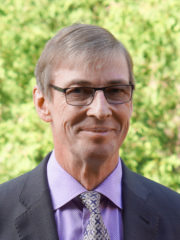
Mr. Loftur Jónasson, Chief, CNS and Spectrum, ICAO
Loftur Jónasson is chief of the CNS and Spectrum Section at the International Civil Aviation Organization (ICAO). The section is ICAO’s primary focal point for standardization and implementation support for aeronautical communications, navigation and surveillance (CNS) systems and frequency spectrum management.
Since joining ICAO in 2007 as a technical officer for CNS, Jónasson has focused on CNS standards and frequency spectrum management, including serving as the focal point for ICAO and aeronautical interests at International Telecommunication Union (ITU) World Radiocommunication Conferences (WRC) and related international WRC preparatory activities. He served as secretary of the Aeronautical Communications Panel from 2007 to 2013 and as secretary of the Frequency Spectrum Management Panel from 2013 to 2024.
Before joining ICAO, Jónasson spent 15 years working on aeronautical radio and telecommunications engineering tasks and projects, mainly supporting air-ground and ground-ground voice and data communications and surveillance applications in the North Atlantic region. From 1996 to 2007, he was an active member of the Aeronautical Communications Panel, including serving as rapporteur of two of its long-standing working groups.
Plenary V: CNS Standardization Efforts
Moderator
Mr. Loftur Jónasson, Chief, CNS and Spectrum, ICAO
See biography above.
Panelists
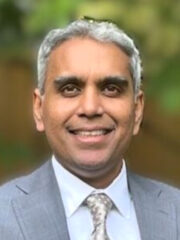
Mr. Mahesh Balakrishna, Senior Program Director, RTCA
Mahesh Balakrishna joined RTCA in 2025 as senior program director and oversees committees developing standards in areas including navigation performance, uncrewed aircraft systems integration, data communications and aeronautical data. His work also includes close collaboration with international organizations to establish technically equivalent international aviation standards.
Before joining RTCA, Balakrishna spent more than 20 years supporting Federal Aviation Administration modernization activities within the National Airspace System. He holds a bachelor’s degree in electrical engineering, a master’s degree in systems engineering, and is a licensed pilot.
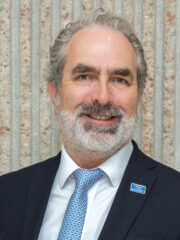
Mr. Mark Watson, Program Manager, EUROCAE
Mark Watson joined the EUROCAE Secretariat in May 2023 as program manager. At EUROCAE, he is responsible for standardization activities covering air traffic management, spectrum and space-based systems.
Before joining EUROCAE, Watson spent eight years in the telecommunications industry. He entered the aeronautics field in 1996 to validate draft ICAO Aeronautical Telecommunication Network upper layer standards and recommended practices. He later gained substantial experience with air traffic management operational concepts in real-time simulation environments and supported the ramp-up and execution of the SESAR 1 and SESAR2020 programs.
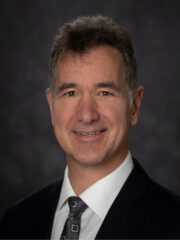
Dr. Wesley A. Olson, Group Leader, Transportation Safety and Resilience, MIT Lincoln Laboratory
Dr. Wesley (Wes) A. Olson is leader of the Transportation Safety and Resilience Group at MIT Lincoln Laboratory, where he oversees development of surveillance and decision support technologies for future transportation systems.
Since 2010, Olson has led development of the next-generation airborne collision avoidance system, ACAS X. He also works on research and development to safely integrate new airspace entrants, including unmanned aircraft systems and advanced air mobility aircraft. He serves as technical adviser to the U.S. panel member on the ICAO Surveillance Panel and the Airborne Collision Avoidance Subgroup, provides technical leadership on several RTCA special committees, and partisscipates on the Air Traffic Control Association Blue Skies Initiative team.
Before joining Lincoln Laboratory, Olson served 22 years in the U.S. Air Force. He is a rated pilot and holds degrees in engineering psychology and human factors engineering.
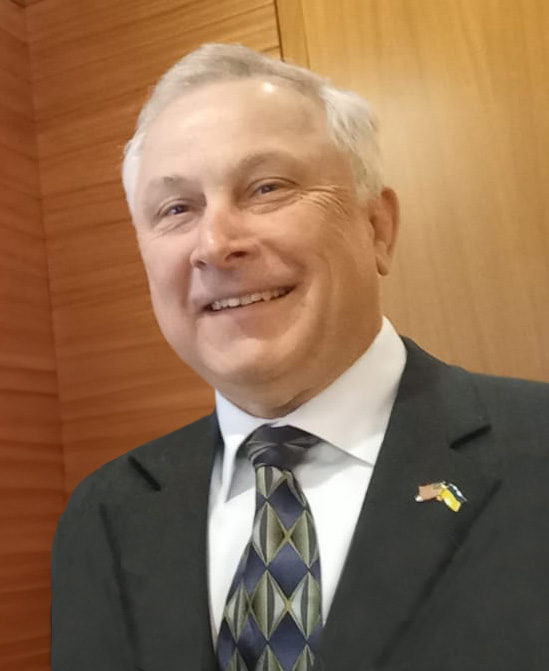
Mr. Paul Prisaznuk, ARINC (Retired)
Paul Prisaznuk is an aviation professional that has served ARINC, EUROCAE, RTCA, and ICAO in various technical capacities for over 35 years. Most recently Paul served as the head of standards development at ARINC. In that role Paul led the development of over 250 technical standards used in the design and construction of commercial air transport, large military aircraft, and other aircraft. These include many air/ground standards applied to communications, navigation, and surveillance (CNS) systems.
Paul is a contributing author to the CRC Press publication, Digital Avionics Handbook. His contributions describe the ARINC 429, Digital Information Transfer System, and the ARINC 653, Avionics Application Software Standard Interface. Paul holds a bachelor’s degree in electronic engineering from the University of Dayton.
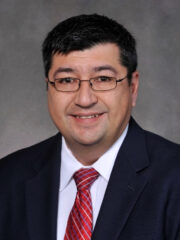
Mr. Kim Kolb, Aerospace Engineer, The Boeing Company
Kim Kolb is an aerospace engineer and technical fellow with The Boeing Company in Boeing’s Global Spectrum Management organization. Mr. Kolb is an experienced radio frequency spectrum management engineer who represents Boeing in venues including the ITU, ICAO, RTCA and EUROCAE. His experience has focused on aviation, radar, space, science and remote sensing issues. He has chaired many drafting group activities at the ITU, helping develop several ITU-R recommendations and reports, in addition to leading several working groups in RTCA/EUROCAE joint committees.
Mr. Kolb currently serves on the leadership committees of RTCA SC-239/EUROCAE WG-119 (Radio Altimeter) and RTCA SC-242/EUROCAE WG-124 (Spectrum Management). He also serves as the ICCAIA panel member for the ICAO Frequency Spectrum Management Panel.
Workshop: Space Is Open for Business: Commercial Launch Growth and the Impact on CNS and the Air Traffic System
Best Paper Awards 

11:35 – 12:00
Awards Ceremony, Dr. Gabriele Enea, MIT Lincoln Laboratory
Networking and Lunch
12:00 – 13:00
Technical Program
ICNS 2026 Sponsors
Thank you to this year’s sponsors. Your financial support is crucial to the success of the conference and we thank you for this.
Platinum
Gold





Silver

Exhibitor