

Topic: Space Is Open for Business: Commercial Launch Growth and the Impact on CNS and the Air Traffic System
Description: Commercial space launches have grown rapidly in recent years, with more frequent and varied missions, from satellite deployments to space tourism. This growth is creating an urgent need for air traffic system engineers to understand the evolving aerospace environment.
This workshop will examine how increasing numbers of suborbital and orbital flights intersect with traditional aviation systems and what that means for communications, navigation, and surveillance (CNS) in the National Airspace System (NAS). It will also explore how launch and reentry trajectories affect radar coverage, position reporting, collision-avoidance protocols, and existing CNS infrastructure.
Workshop Chair
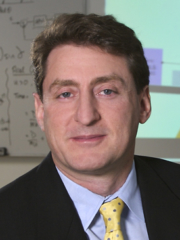
Dr. Lance Sherry, Director, Center for Air Transportation Systems Research, George Mason University
Lance Sherry is a professor of systems engineering and operations research at George Mason University and serves as director of the Center for Air Transportation Research. He has more than 30 years of experience in the aviation industry, where he has worked as a flight-test engineer, flight control engineer, systems engineer, lead systems architect, program manager, and in strategic planning and business development. He was a fellow at the RAND Corporation from 1999 to 2001. He has published more than 100 papers and journal articles, holds several patents, and has received awards for his work.
Panelists
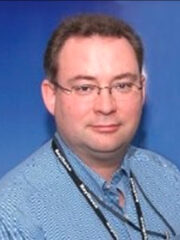
Steve Marley, Senior Project Lead, The Aerospace Corporation
Steve Marley is a FEAF-certified enterprise architect who has specialized in complex scientific data and information systems supporting environmental observation science and ground system operations since 2004. With nearly 30 years of experience developing environmental satellite ground systems for scientific applications, he has led and contributed to the design of major international programs, including the European Space Agency’s European Remote Sensing series, NASA’s Earth Observing System series, the U.S. Geological Survey’s Landsat 7 mission, and NOAA’s Geostationary Operational Environmental Satellite-R Series.
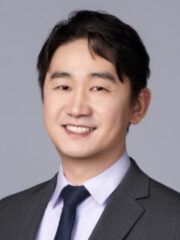
Zheng Tao, President, AirSpace Innovation
Zheng Tao is co-founder and president of AirSpace Innovation, where he provides executive leadership for strategy, engineering, operations, and business development. He leads an engineering firm focused on advancing commercial space launch and reentry, higher airspace operations, low-altitude operations, and air traffic management modernization. With a strong foundation in technical leadership, executive management, and strategic planning, he drives initiatives that improve operational efficiency and support the integration of emerging aviation domains, including Advanced Air Mobility and commercial space operations. He has a proven record of delivering customer-focused solutions and building strategic partnerships across government, industry, and academia, with an emphasis on measurable outcomes such as modernizing traffic flow management, enabling new entrants into the airspace, and advancing digital transformation through AI/ML and cloud-based technologies. His expertise includes systems engineering, airspace integration, modeling and simulation, data analytics for complex aviation challenges, air traffic management infrastructure, space launch and reentry regulations, and next-generation airspace operations.

Dr. Chaowei Yang, Professor, Geography and Geoinformation Science, George Mason University
Dr. Chaowei “Phil” Yang is a professor of geographic information science at George Mason University and founding director of the NSF Spatiotemporal Innovation Center, a major collaborative initiative involving institutions including Harvard and the University of California, Santa Barbara. He earned a bachelor’s degree and master’s degree in physics from Northeastern University, a doctorate from Peking University, and completed postdoctoral research at the University of Calgary. His research focuses on applying spatiotemporal principles to optimize computing infrastructure for scientific discovery and engineering innovation. His work has been supported by more than $40 million in research funding, and he has authored more than 300 publications while mentoring more than 30 faculty members now serving in the United States and internationally. Dr. Yang has also held prominent leadership roles, including president of CPGIS and co-founding chair of AAG CISG, and has received numerous national and international honors, including the Environmental Protection Stewardship Award presented by President Barack Obama.