

On behalf of the organizing committee of ICNS 2026, we are pleased to welcome you to the 26th Integrated Communications, Navigation and Surveillance (ICNS) Conference, held 14–16 April 2026 in Herndon, Virginia. This year’s theme, “Enhancing the Resilience of Future ICNS,” underscores the growing importance of robust, adaptable, and secure communications, navigation, and surveillance (CNS) capabilities in today’s complex aviation ecosystem.
Since it began as a NASA workshop in 2001, ICNS has evolved into a premier international aviation forum where policy discussions, operational experience, and technical innovation come together. Each year, ICNS brings together leaders, operational and technical experts, and researchers from government, industry, and academia to address challenges and discuss future directions of CNS.
Aviation is at a key turning point, facing a convergence of aging infrastructure, growing air traffic demand, and the integration of new entrants, with growing expectations for safety, efficiency, and sustainability. In this context, resilience has become a must-have requirement for future CNS.
We welcome our esteemed keynote speakers, starting with Mr. David S. Burkholder, Acting Executive Director, Office of International Affairs, Federal Aviation Administration, U.S. Department of Transportation. Tuesday’s keynote will be followed by two plenary sessions: the first dedicated to “Current Datalink/DataComm Metrics and Future Communication Technologies,” and the second to “GNSS Spoofing and Jamming—Potential Mitigations.” On Tuesday evening, Greg Bowles, Chief Policy Officer, Joby Aviation, will be our guest speaker.
On Wednesday morning, Dr. Jim Hileman, Chief Engineer and Vice President of Sustainability and Future Mobility, The Boeing Company, will deliver the Day 2 keynote. Two plenary sessions will follow: “Pilots’ and Controllers’ Perspectives on Surveillance Resilience,” and “Trajectory-Based Operations (TBO).”
On Thursday, Mr. Loftur Jónasson, Chief, CNS and Spectrum (CNSS), Air Navigation Bureau, International Civil Aviation Organization, will deliver the Day 3 keynote. His keynote will be followed by a plenary on “CNS Standardization Efforts,” and an interactive workshop on “Space Is Open for Business: Commercial Launch Growth and the Impact on CNS and the Air Traffic System.”
Afternoon sessions are organized into 6 technical tracks and 90 technical presentations. Participation is global, with authors from North America, South America, Europe, Africa, the Middle East, and the Asia-Pacific region. There is strong engagement from young researchers, including 35 student-authored papers. Awards will be presented for outstanding technical papers: Best of Conference, Best of Track, and Best Student Paper.
Many people contribute to the success of ICNS each year. We thank our keynote speakers, plenary panelists, authors, reviewers, and chairs for sharing their expertise and insights. We are also grateful to our sponsors and supporters, whose continued commitment sustains this conference. We extend our appreciation to the ICNS organizing committee and volunteers who dedicate their time and energy.
Most importantly, you—the participants—are what make ICNS special. Your engagement, questions, and ideas transform a conference into a true exchange of knowledge and perspectives. ICNS has always been a place where conversations continue beyond the meeting rooms—during breaks, meals, and evening events—often sparking collaborations and new ideas that shape future work across our community. We encourage you to make the most of these three days: listen, question, connect, and share your experiences. We hope you go home with a renewed sense of purpose for advancing resilient CNS capabilities.
We look forward to an engaging, productive, and memorable conference together.

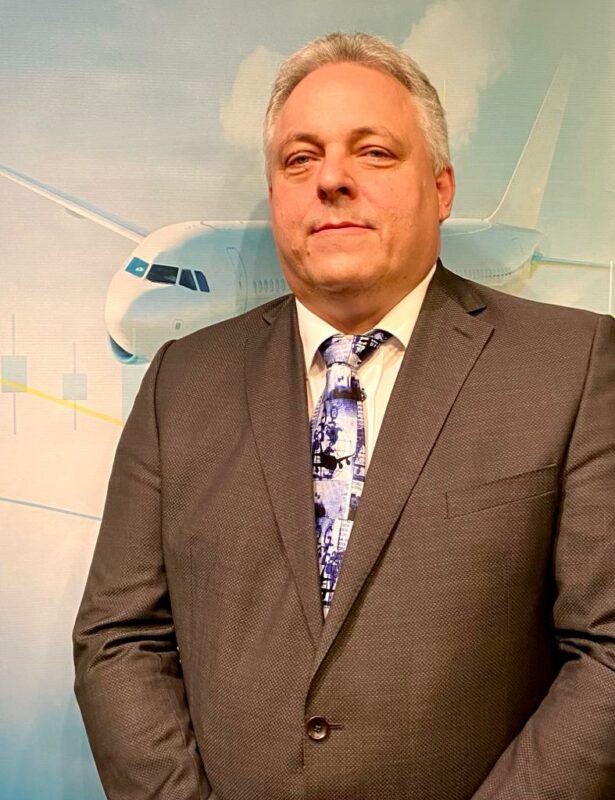
Sherry Yang and Dr. Rainer Kölle
ICNS 2026 Conference General Co-chairs
ICNS 2026 Sponsors
Thank you to this year’s sponsors. Your financial support is crucial to the success of the conference and we thank you for this.
Platinum

Gold






Silver

Exhibitor